
Introduction
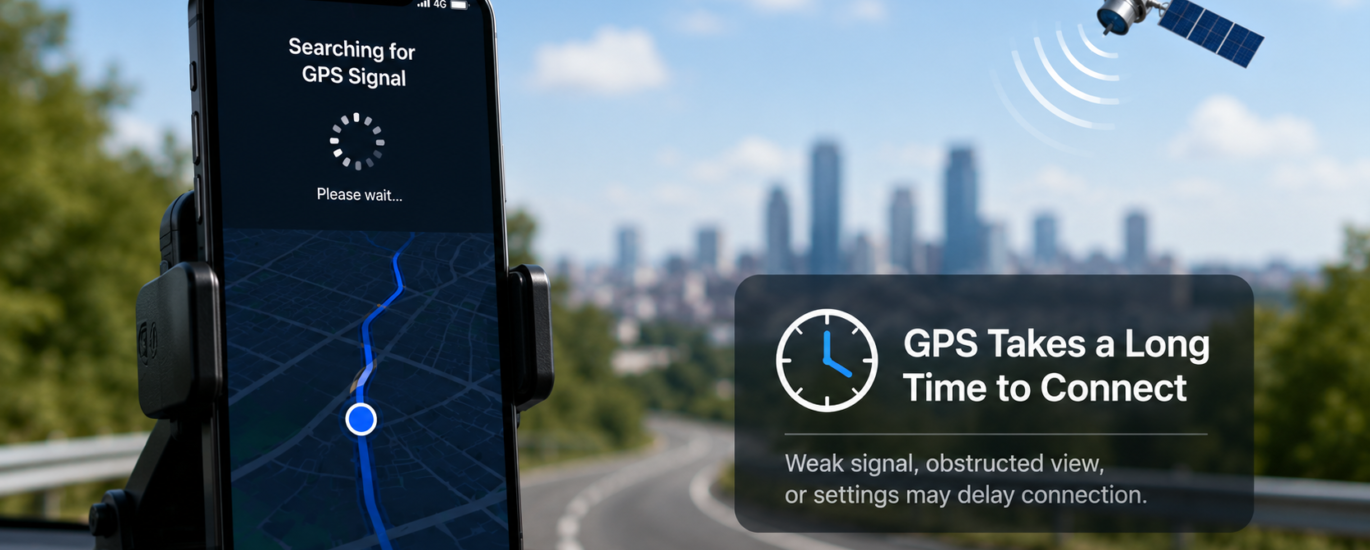
GPS technology allows smartphones to determine their location for navigation, location sharing, fitness tracking, weather services, and other location-based features. Under normal conditions, most modern devices can establish a GPS connection within a few seconds. However, there are times when GPS takes much longer to connect or continuously searches for satellite signals before determining your location.
A slow GPS connection does not always indicate a hardware problem. In many cases, delays are caused by weak satellite reception, software settings, environmental conditions, or temporary system issues. By understanding the possible causes, you can often improve GPS performance and reduce connection times.
This guide explains why GPS may take a long time to connect and provides general troubleshooting steps that can help improve location detection.
What Does “GPS Takes a Long Time to Connect” Mean?
When GPS starts searching for satellites, it must receive enough satellite information to calculate your current position. If this process takes longer than expected, your device may continue displaying messages indicating that it is searching for your location.
Common symptoms include:
- GPS continuously searches for a signal.
- Navigation cannot begin immediately.
- Your current location takes several minutes to appear.
- The location icon keeps blinking.
- GPS connects only after waiting for a long time.
- Navigation applications remain on the loading screen.
Although brief delays are normal in certain situations, repeated long connection times may indicate an underlying issue.
Common Causes of Slow GPS Connection
Limited Satellite Visibility
GPS works best when the device has an unobstructed view of the sky. Buildings, tunnels, parking garages, mountains, and dense tree cover can reduce satellite visibility, increasing the time needed to establish a GPS connection.
Suggested Action
Move to an open outdoor location with minimal obstructions and allow the device several moments to receive satellite signals.
Weak GPS Signal
Poor satellite reception can delay location detection.
Signal strength may decrease in:
- Urban areas with tall buildings
- Underground locations
- Dense forests
- Mountain regions
- Indoor environments
Suggested Action
Test GPS outdoors where satellite signals are generally stronger.
Location Services Are Disabled or Restricted
If location services are disabled or application permissions are restricted, GPS may not function correctly.
Suggested Action
Verify that location services are enabled and ensure that the application has permission to access your device’s location.
Temporary Software Issues
Temporary software glitches may delay communication between the operating system and GPS services.
Suggested Action
Restart your device and test GPS again after the system has fully restarted.
Outdated Device Software
Older operating system versions or applications may contain issues that affect GPS performance.
Suggested Action
Install available software updates for your operating system and any applications that use location services.
Battery Saving Features
Power-saving modes may reduce GPS activity to extend battery life, resulting in slower location detection.
Suggested Action
Temporarily disable battery-saving mode while using GPS-dependent applications.
Network Availability
Although GPS determines location using satellite signals, many smartphones use wireless networks to improve the speed of initial location detection.
Suggested Action
Ensure that available wireless connections are functioning normally if your device supports enhanced location services.
First GPS Connection After Restart
After restarting a device or traveling a long distance, GPS may require additional time to establish an accurate location.
Suggested Action
Remain in an open area and allow the device sufficient time to complete the initial satellite connection.
General Troubleshooting Steps
If GPS consistently takes a long time to connect, try the following:
- Restart your device.
- Enable location services.
- Verify application location permissions.
- Move to an open outdoor area.
- Wait several minutes for GPS to establish a satellite connection.
- Disable battery-saving mode temporarily.
- Install available software updates.
- Update applications that use GPS.
- Test GPS using another location-based application.
- Restart the device after completing updates or configuration changes.
Tips to Improve GPS Connection Speed
To help GPS connect more quickly:
- Keep your operating system updated.
- Update location-based applications regularly.
- Begin navigation only after your current location has been detected.
- Use GPS outdoors whenever possible.
- Avoid locations where satellite signals are blocked.
- Keep your device sufficiently charged.
- Restart your device periodically to maintain stable system performance.
Frequently Asked Questions
Why does GPS take several minutes to connect?
Slow GPS connections are commonly caused by weak satellite reception, obstructed views of the sky, disabled location settings, software issues, or power-saving features.
Is it normal for GPS to take time to connect?
Yes. GPS may require additional time when the device is restarted, moved a long distance, or used in areas where satellite signals are weak.
Can buildings affect GPS connection time?
Yes. Tall buildings, tunnels, underground parking areas, and other large structures can block satellite signals and increase the time required to determine your location.
Does an internet connection improve GPS performance?
GPS itself receives signals directly from satellites. However, some devices use wireless network information to improve the speed and accuracy of location detection.
When should I seek additional assistance?
If GPS continues to take an unusually long time to connect after completing standard troubleshooting steps and the problem occurs across multiple location-based applications, consult your device manufacturer’s documentation or an authorized service provider for further evaluation.
Best Practices for Reliable GPS Performance
For consistent GPS performance:
- Install software updates regularly.
- Keep location services enabled when needed.
- Review application permissions periodically.
- Use GPS in areas with good satellite visibility.
- Avoid unnecessary battery-saving restrictions during navigation.
- Restart your device occasionally to refresh system services.
Conclusion
A GPS connection that takes a long time to establish is usually caused by weak satellite reception, environmental conditions, software settings, or temporary system issues rather than hardware failure. Most connection delays can be reduced by using the device in open outdoor areas, keeping software updated, enabling location services, and following standard troubleshooting procedures. If GPS remains slow across multiple applications after completing these steps, further technical evaluation may be appropriate.
Disclaimer
This article is provided for general informational and educational purposes only. It is not affiliated with, endorsed by, or sponsored by any smartphone manufacturer, navigation service, software developer, or GPS provider. All trademarks, product names, and service names are the property of their respective owners.